November 25, 2022
Baltic Honeybadger- Bitcoin Conference Summary

In this artile
First kicked off in 2017, the Baltic Honeybadger has since been the biggest European bitcoin-only conference. However, 2022 was extra special, as it welcomed back the global bitcoin community first time since covid-restrictions were lifted.
About the Baltic Honeybadger
First kicked off in 2017, the Baltic Honeybadger has since been the biggest European bitcoin-only conference. However, 2022 was extra special, as it welcomed back the global bitcoin community first time since covid-restrictions were lifted.
The event felt like an intimate gathering of 600 true bitcoin aficionados and 70 influential bitcoin ecosystem speakers.
The speaker lineup, content, and networking opportunities didn’t disappoint, offering an exclusive opportunity to network with like-minded individuals.
Baltic Honeybadger was organized in Riga between the 3rd and 4th of September and covered the most critical subjects of Bitcoin development.
Baltic Honeybadger Had:
- Over 70 speakers
- Over 600 attendees
- Side events & parties
Image credits: Baltic Honeybadger
Speakers at Baltic Honeybadger
Many leading personalities in the crypto industry gathered at the conference, some unable to attend IRL. Still, because it was an event that couldn’t be missed, they attended online remotely.
- Adam Back– CEO at Blockstream
- Michael Saylor– CEO at MicroStrategy
- Jack Mallers– Founder/CEO of Strike
- Giacomo Zucco- Bitcoin cultist
- Marty Bent– Host of ‘Tales from the Crypt’ podcast
- Filip Karađorđević– HRH Hereditary Prince
- Jimmy Song– Bitcoin expert and author
- Peter Todd– Bitcoin developer
- Sergio Demian Lerner– IOV Labs Chief Scientist
- Max Kei– CEO of Hodl Hodl
- Warren Togami– VP Solutions, Blockstream

Image credits: Baltic Honeybadeger
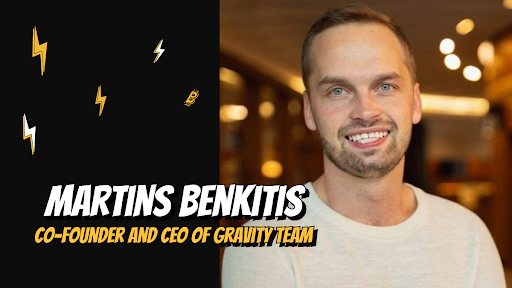
- Martins Benkitis: Co-Founder and CEO represented our team and our ascending activity: one of the fastest-growing crypto market makers, ~1% of the total spot trading volume.
Baltic Honeybadger Agenda – Highlights
The first day of the conference kicked off with a panel discussion about Sidechains and Layer 2 by Adam Back, Paul Sztorc, Lisa Neigut, and Obi Nwosu.

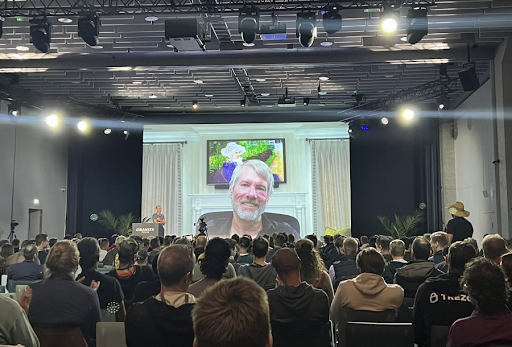
Later on, Michael Saylor the CEO of Microstrategy held a Q&A hosted by Daniel Prince.
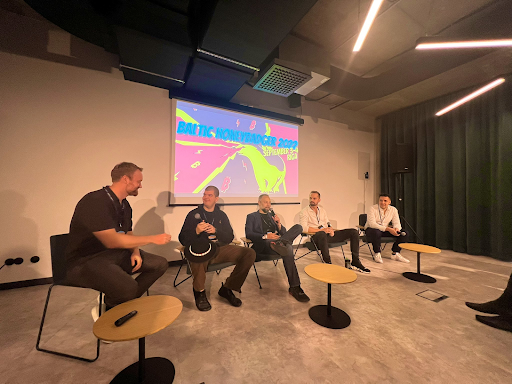
Gravity Team’s CEO, Martins Benkitis, joined the panel discussion about Bitcoin Trading hosted by Matthew Mezinskis and panel speakers Ambroid, Nik Oraevskiy, and Riccardo Masutti.
Main Discussions – Highlights
About Lightning Work by Michael Saylor
Michael Saylor joined Baltic Honeybadger via video call and shared that his firm, MicroStrategy, is working on solutions that will onboard a vast number of people into the Lightning network – a fast network payment that enables cheap transactions.
Michael Saylor also strongly outlined this as essential in the technology sphere.
“MicroStrategy has got some R&D projects going on right now where we’re working on enterprise applications of Lightning: enterprise Lightning wallet, enterprise Lightning servers, enterprise authentication.” – Michael Saylor.
Additionally, the advantage of the Lightning network is the ethos of bitcoin that goes carefully without moving too fast on the base layer without the universal consensus – with Lightning, users can move much more quickly, developing functionality and being able to take risks with applications compared to the underlying bitcoin layer.
Security & Hardware Wallets by Douglas Bakkum, Peter Todd, Rigel Walshe, Pavol “Stick” Rusnák, and Daniel Prince
Secure bitcoin self custody was a subject that was connected to industries of hardware wallets and physical back-ups.
Air gapping was discussed in the panel talk on security and by Douglas Bakkum. Air gapping is a form of data transfer between hardware wallets, phones, or computers that use SD or QR codes.
Regarding SD cards, Peter Todd shared that they are complex and may have a vast field of attack compared to USB cables. Pavol Rusnak added that QR codes currently represent the safest way of air gapping.

Bitcoin Counterculture and Its “Psychopathic” Defenders by Rigel Walshe
The Bitcoin culture was the subject of Rigel Walshe, which outlined that not everybody sees Bitcoin as a culture. Still, he added that a couple of people together create a culture.
Bitcoin culture is defined as a counterculture that centers around opposition to elements of the basic culture. However, the course of countercultures transition into mainstream cultures.
The transition was explained via three theories:
- Mimetic Theory: adopting and imitating the behavior of role models.
- Geeks, Mops, and Sociopaths Theory: new and innovative ideas become in trend, cool. Just like Satoshi Nakomoto created something cool helped by other believers of his work which brought awareness to its creation. The Mops are contributors that add little value to it, and the sociopaths exploit it for their own good.
- Eternal September Theory: it is a stage explained through the lens of the late ‘90 when the internet was accessed at universities mainly, and new students had to be trained to use it as they were unfamiliar with it – this can refer to Bitcoin also. It is facing the same stage because the new users are more often unable to understand private keys and other aspects.
In conclusion, Rigel Walshe said there is a trading between numbers and nuances, and a solution to this is to know the base ideas of the culture of Bitcoin that new members need to intake and transform into sounds, memes, or any consumable information.
The Official Afterparty Sponsored by Gravity Team
After a full day of panel discussions, a well-deserved afterparty welcomed attendees to recharge their batteries and relax with some crypto-themed cocktails, powered by Gravity Team. Also, Gravity Team offered a special DJ set to cool off the atmosphere at Baltic Honeybadger.

Final Thoughts
The Baltic Honeybadger 2022 truly proved itself deserving the OG bitcoin conference status thanks to the line up of speakers and top networking opportunities it provided. Thanks to the organizers from Hodl Hodl for putting together such a quality event.
We’re honoured to have been one of the main sponsors of such a cornerstone industry event.
We look forward to Baltic Honeybadger’s next editions!